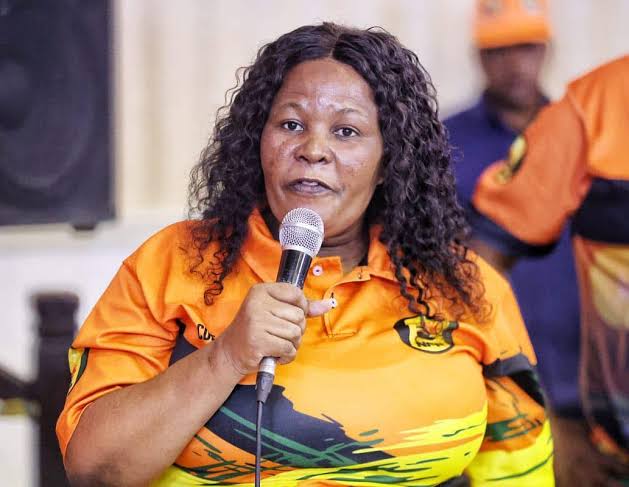
Mbali Shinga’s failed appeal against her expulsion from the National Freedom Party has left her facing one of the biggest political tests of her career.
The party’s appeals process upheld the decision to expel her, effectively ending her membership of the NFP. Reports say appeal chairperson Zweli Zakwe dismissed Shinga’s grounds of appeal and confirmed both her conviction and expulsion.
But the matter is unlikely to end with the appeal outcome.
Shinga still has political options, especially if the support base forming around her continues to grow. The first possible route is a legal challenge, where she could ask a court to review the party’s internal process and test whether her expulsion was handled properly.
The second route is political. If her supporters remain loyal, Shinga could try to rebuild outside the NFP, align with another political movement, or use her growing structure as a campaign force ahead of the local government elections.
That is where the NFP’s victory becomes more complicated.
On paper, the party has won. It has removed a member it accused of defying instructions and has sent a clear message about discipline inside the organisation.
But politics is not only fought on paper. It is also fought in branches, communities and voting districts.
If Shinga’s supporters believe she was treated unfairly, the NFP may still face pressure on the ground, especially in areas where her personal following is believed to be strong, including Utrecht/eMadlangeni, eDumbe, Newcastle, Dannhauser, Vryheid/AbaQulusi and parts of Zululand and Amajuba.
For Shinga, the next few weeks will be critical. She must decide whether to challenge the expulsion legally, accept the outcome, or turn the moment into a new political platform.
For the NFP, the challenge is also clear: it must now prove that removing Shinga will strengthen the party, not divide it further before campaign season.
The appeal may be over, but the political fight around Mbali Shinga may only be entering its next phase.