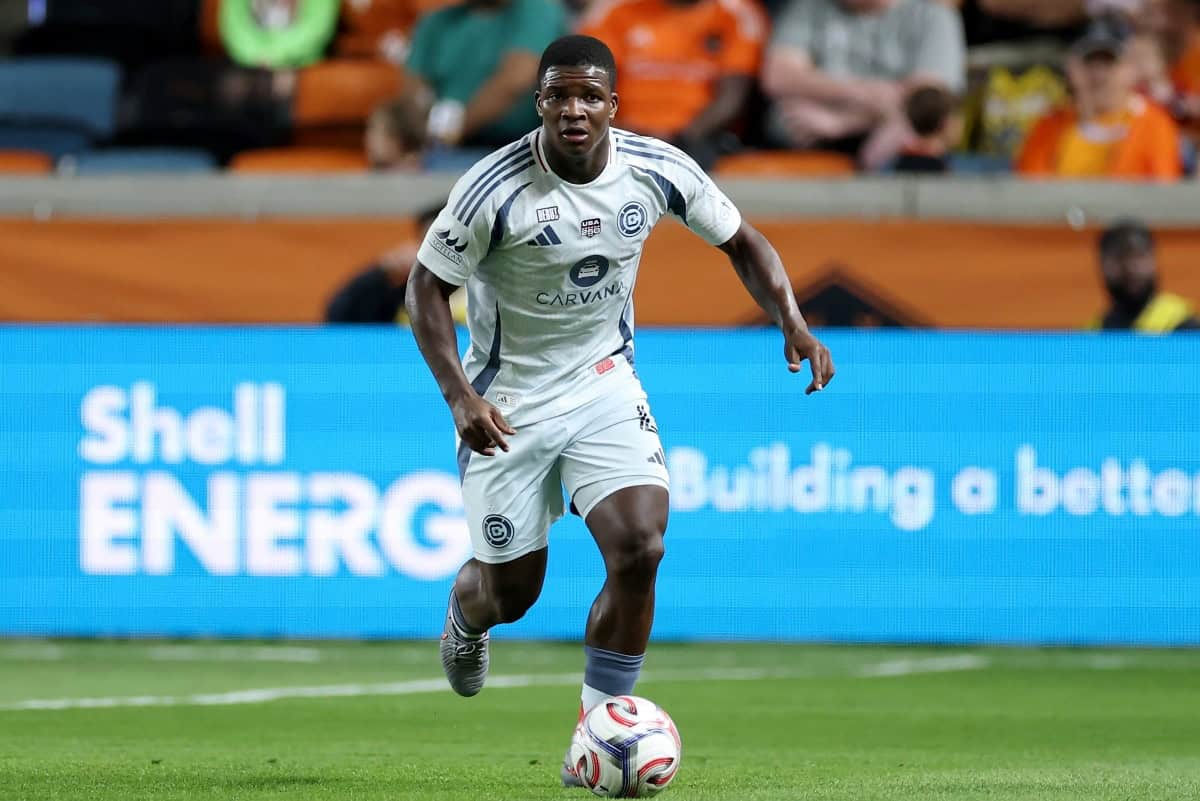
Mbekezeli Mbokazi’s move to Chicago Fire is no longer just a transfer story.
It is becoming one of the most unusual South African football stories in recent memory.
A 20-year-old defender leaves Orlando Pirates for Major League Soccer, faces questions over whether Chicago is the right step, then becomes one of the most talked-about players in America’s football media space.
That is the Mbokazi story right now.
The Athletic, the sports platform owned by The New York Times Company, has placed him under a serious spotlight. Its profile of Mbokazi carried a headline that says everything about the scale of the surprise: “Mbekezeli Mbokazi is the most popular player in MLS you’ve never heard of.” The New York Times Company bought The Athletic in 2022, and Reuters has also described The Athletic as part of the New York Times sports media operation.
According to The Athletic’s reporting, Chicago Fire gained 180,000 followers in the first 48 hours after announcing Mbokazi’s signing from Orlando Pirates. The same report said more than 572,000 South African accounts now follow the Fire, making up about a quarter of the club’s social media audience.
Then came the line that turned the story from impressive to extraordinary: Mbokazi had outpaced Lionel Messi, Son Heung-min and the rest of MLS in fan voting for the summer’s All-Star Game.
That does not mean Mbokazi is bigger than Messi. Nobody serious is saying that.
But it does mean something important: South African fans carried one of their own into a space usually dominated by global superstars.
That fan power has now met official recognition. Reuters reported that Mbokazi was named in the 2026 MLS All-Star First XI, with the selections decided through a combined vote of fans, players and media. Messi and Son were also named in the same First XI, placing Mbokazi in elite company inside the league.
What makes this rise even more powerful is the backlash that came before it.
Bafana Bafana coach Hugo Broos was among those who questioned whether Chicago was the right move for Mbokazi’s development. Others also wondered whether a player seen as one of South Africa’s brightest defensive prospects should have gone to Europe instead of MLS.
Those questions were not unreasonable.
South African football has seen too many players make big moves that looked good on paper but failed to grow their careers. Supporters were right to ask whether this was the correct pathway.
But Mbokazi is now giving the best possible answer.
Not through noise.
Through visibility, performances, selection, and a wave of support that even American football media could not ignore.
This is why the New York Times attention matters. South African players are often celebrated at home but disappear from global conversation unless they play in Europe. Mbokazi is bending that pattern. He is making MLS a stage big enough for South African fans, American media and global football audiences to take notice.
The Benni McCarthy comparison will naturally come up because Benni remains the standard for South African football visibility abroad. But this is a different era and a different kind of fame.
Benni’s name travelled through goals, Europe and the Champions League.
Mbokazi’s name is travelling through MLS, social media power, World Cup timing and a fanbase that followed him across continents.
That does not make him bigger than Benni. It makes his rise different.
And possibly historic in its own way.
A defender from South Africa has gone to Chicago, forced one of America’s biggest sports platforms to keep writing about him, entered the MLS All-Star conversation with Messi and Son, and turned doubt over his move into momentum.
For Mbokazi, the move many questioned is now becoming the move everyone is watching