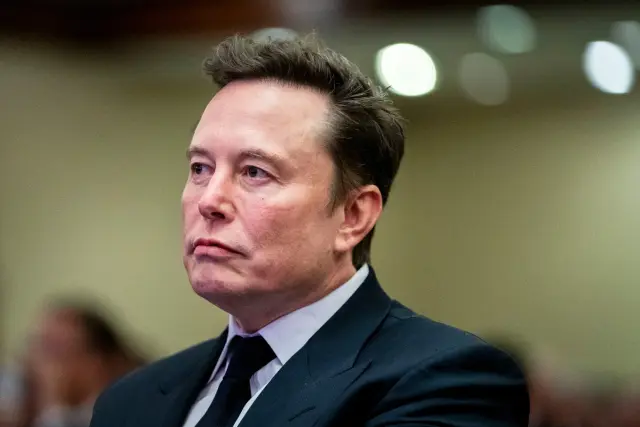
Elon Musk, the Pretoria-raised entrepreneur who went on to become one of the most powerful figures in global technology, has made history as the world’s first trillionaire.
The milestone comes after SpaceX’s record-breaking public listing, which pushed Musk’s fortune beyond the trillion-dollar mark and placed him in a financial league no individual has reached before.
For the world, it is a business story.
For South Africa, it lands closer to home.
Musk was born and raised in Pretoria before leaving the country as a teenager. Long before Tesla, SpaceX, Starlink and the global headlines, he was a South African child growing up in a country still trying to understand what kind of future technology could build.
Today, he stands at the centre of that future.
His companies have changed major industries. Tesla forced the world’s biggest carmakers to take electric vehicles seriously. SpaceX changed the economics of space travel. Starlink pushed satellite internet into the mainstream. Neuralink, xAI and his other ventures continue to place him at the centre of some of the most ambitious and controversial technology debates of our time.
But this moment is not only about money.
A trillion-dollar fortune is almost too large to understand. It speaks to the scale of modern technology companies, the power of ownership, and the way global markets reward those who build platforms that can reshape entire industries.
For South African tech builders, Musk’s rise carries both inspiration and discomfort.
It is inspiring because someone who grew up here has reached the highest point in global business history. It is uncomfortable because his biggest breakthroughs happened elsewhere, in an environment with deeper capital, stronger technology networks and more room for ambitious founders to scale.
That is the question South Africa must sit with.
How much talent is being born here, educated here, shaped here - only to find its real opportunity somewhere else?
Across South Africa, young developers, engineers, designers, founders and digital creators are building under difficult conditions. Many do not lack ideas. They lack funding, infrastructure, market access, mentorship and the kind of belief system that allows big technology companies to grow from local soil.
Musk’s story should not be reduced to national pride alone. It should also be treated as a challenge.
South Africa cannot only celebrate its builders once they become global elsewhere. It must build the conditions that allow more of them to succeed from here.
The country has the talent. It has young people learning to code, building apps, experimenting with artificial intelligence, solving township and rural problems, and trying to create businesses in a difficult economy.
What remains missing is a serious national culture of backing builders early, funding innovation properly, and treating technology as more than a buzzword.
Musk’s rise from Pretoria to the top of the global wealth table is now part of business history.
But for South Africa, the bigger story is what comes next.
Can the country produce more builders who think globally? Can local tech founders get the support to scale? Can the next major technology company be built from Newcastle, Durban, Johannesburg, Cape Town or Pretoria?
Elon Musk has become the world’s first trillionaire.
Now South Africa must ask whether it is ready to build the next generation of people who do not only dream at that level, but are given the chance to build at that level from home.