The battle lines in South African politics may be shifting once again.
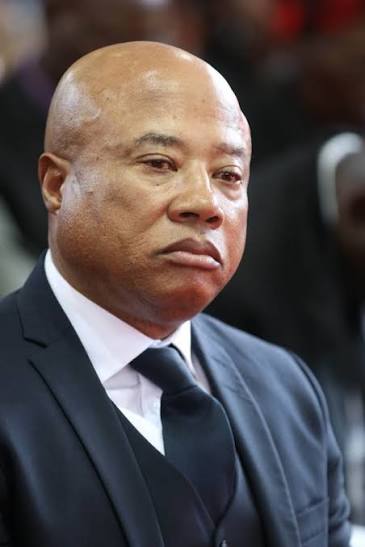
Speaking at the South African Communist Party's Conference of the Left in Boksburg, MK Party leader Tony Yengeni called for a united left-wing political front capable of taking power and driving a programme of radical economic transformation.
Yengeni's message was clear: progressive organisations, workers' movements and left-leaning political formations should stop operating in isolation and begin working towards a common political project.
His proposed agenda includes land reform, greater state control of strategic sectors of the economy, parliamentary reform, anti-corruption measures and stronger African political cooperation.
But while the speech was framed as a call for unity, it was also a direct attack on parties such as the Democratic Alliance and Freedom Front Plus.
Yengeni accused both parties of defending historical privilege and resisting transformation, arguing that opposition to land reform and economic restructuring is ultimately about preserving existing economic power.
For supporters of the left, the message may resonate.
Many South Africans remain frustrated by persistent inequality, unemployment and slow economic transformation more than three decades after democracy.
Yet Yengeni's remarks also raise a difficult question.
Who exactly is standing in the way of transformation?
For critics, the challenge facing South Africa is not a shortage of revolutionary ideas. It is a shortage of effective governance.
They argue that many of the leaders calling for a new economic revolution are themselves products of the political establishment that has governed South Africa for decades.
As a result, growing numbers of voters are beginning to ask a different question.
If economic transformation has been blocked, who has been responsible for implementing it?
The answer is politically uncomfortable.
Since 1994, South Africa's governing institutions, state-owned enterprises, legislatures and municipalities have largely been under the control of parties that identify with broad transformation goals.
That reality has made some voters increasingly sceptical of political rhetoric focused on historical enemies rather than present-day performance.
The debate is becoming particularly relevant as the country approaches the next local government elections.
Across many communities, concerns about service delivery, crime, unemployment, infrastructure collapse and corruption often rank higher than ideological debates.
For those voters, the issue is less about whether South Africa needs a stronger left or a stronger right.
It is about whether any political formation can demonstrate the ability to govern effectively.
This is where Yengeni's proposal faces its biggest test.
A united left-wing front may sound powerful in theory, but it would need to bring together organisations with different leadership structures, competing ambitions and overlapping voter bases.
It would also need to convince South Africans that expanding state influence in the economy would produce different results from previous attempts that have been criticised for corruption, inefficiency and political patronage.
The Conference of the Left may ultimately be remembered as more than just another political gathering.
It may signal the beginning of a broader attempt to reorganise South Africa's left-wing politics in response to the Government of National Unity and a changing electoral landscape.
Whether that project gains momentum remains to be seen.
What is already clear, however, is that South Africa's political debate is moving beyond the traditional ANC-versus-DA contest.
The bigger question emerging is whether voters still see ideology as the solution — or whether they are increasingly looking for competence, accountability and results.